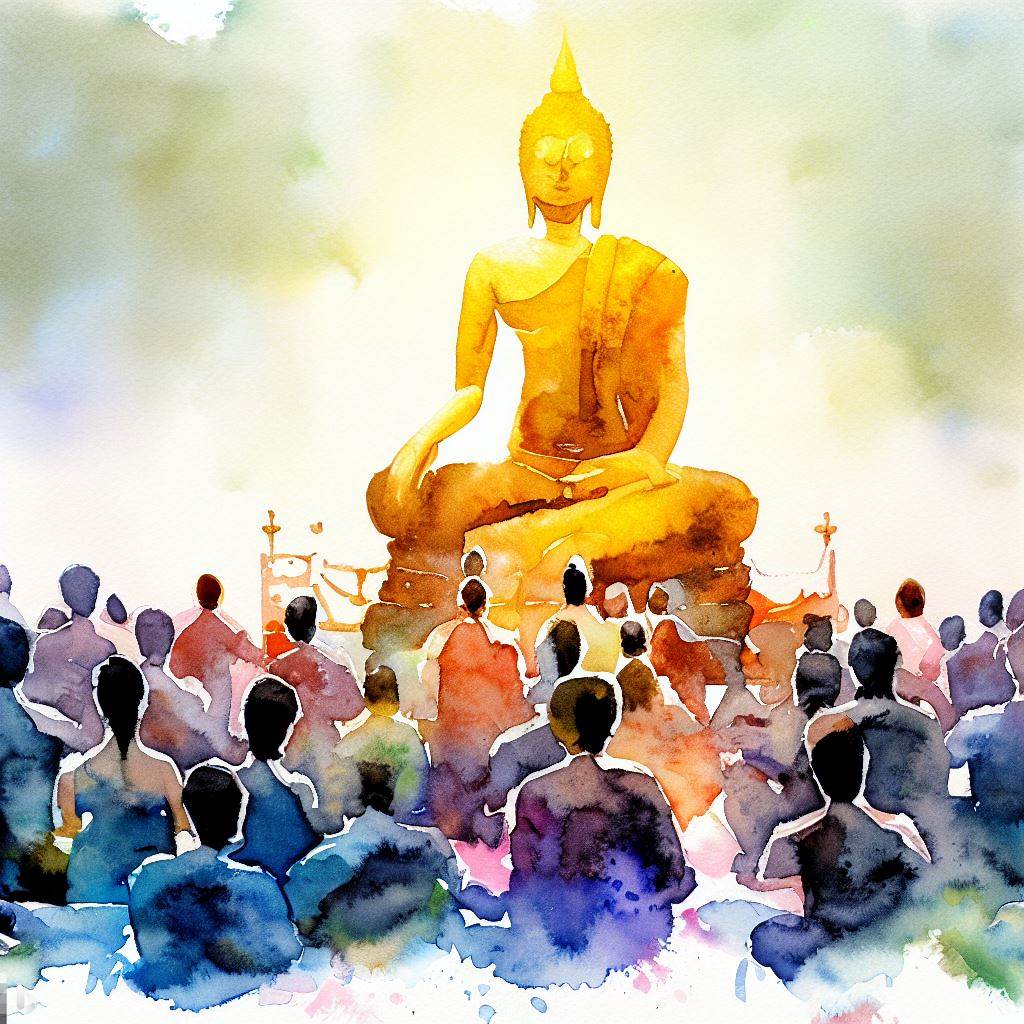
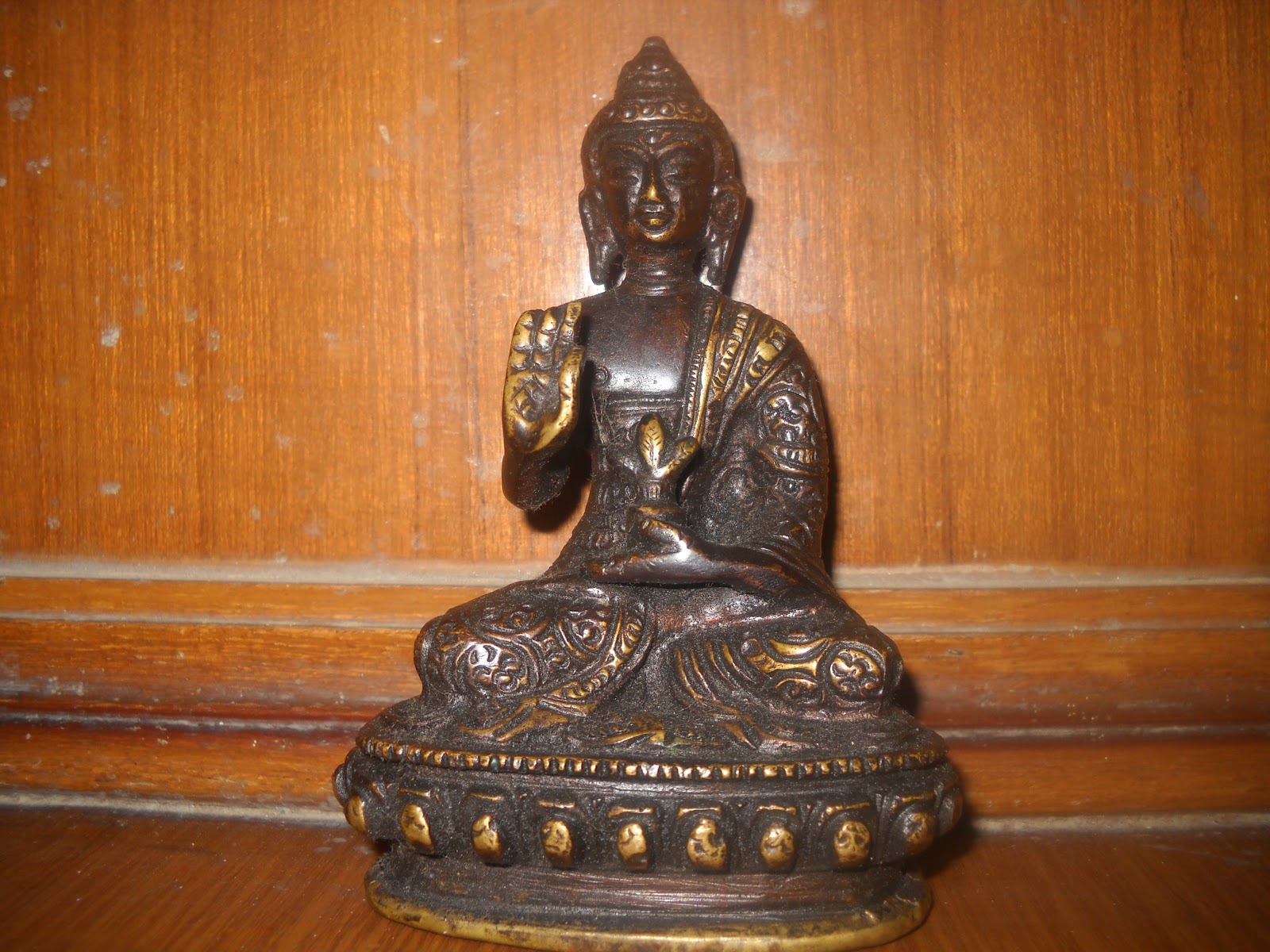
Buddha

Wednesday, July 19, 2023

The Power of Discipline

 In the serene mountains of a distant land, there resided a revered Buddhist monastery, known for its wisdom and discipline. Among the monks, there was one who stood out for his remarkable devotion and dedication to the path of enlightenment - Monk Keshava.


monk
Monk in Garden


From a young age, Keshava was drawn to the teachings of Buddha. He was admitted to the monastery at an early age, where he began his arduous journey of learning and practicing the ancient principles. Under the guidance of the venerable Master Shantarakshita, Keshava imbibed the essence of Buddha's teachings, but he struggled with discipline.


While the other monks diligently followed the monastery's strict routines, Keshava often found himself lost in his thoughts, forgetting his duties and responsibilities. Master Shantarakshita patiently observed Keshava's struggle and decided to impart a valuable lesson.


One morning, the Master called Keshava to his chamber. "Keshava," he said gently, "you have immense potential, but without discipline, it remains untapped. To fully realize the path to enlightenment, you must embrace discipline wholeheartedly."


Keshava bowed his head, acknowledging his weakness. "Master, I understand, but discipline has always been a challenge for me."


The wise Master smiled compassionately. "I have devised a special task for you, Keshava. You shall water the Bodhi tree in the monastery garden every day for the next three months."


Keshava was puzzled but agreed to undertake the task diligently. The Bodhi tree, under which Lord Buddha attained enlightenment, was revered, and caring for it was a great honor. Keshava's devotion to the task grew each day, and he began to water the tree with deep reverence and gratitude.


As weeks passed, Keshava noticed something remarkable happening. The more he practiced discipline in caring for the Bodhi tree, the more focused his mind became. He realized that by embracing discipline, he was not only nurturing the tree but also nurturing his own soul.


In the quietude of those moments with the Bodhi tree, Keshava understood the significance of discipline in the pursuit of enlightenment. He saw that discipline was not just about following rules; it was about cultivating self-awareness, inner strength, and harmony.


Three months later, when Keshava's task was complete, he approached Master Shantarakshita with newfound humility. "Master, I am grateful for your guidance. Through discipline, I have experienced a transformation within myself. I now understand its importance on the path to enlightenment."


The Master smiled, his eyes filled with pride. "Keshava, you have learned a valuable lesson. Remember that discipline is not a constraint, but a liberating force. Embrace it with sincerity, and you shall continue to flourish on your journey."


From that day on, Keshava became a living embodiment of discipline in the monastery. His unwavering devotion and commitment to the teachings of Buddha inspired fellow monks to follow suit. The ripple effect of his transformation spread through the monastery, signifying the profound importance of discipline on the path to spiritual awakening.


Read more

*Story of Angulimal

*Story of Rice bowl

Friday, June 23, 2023

Buddha story- the first bhikkhuni

 After the Buddha's stepmother, Queen Mahapajapati Gotami, lost her position due to the Queen's death, she became the chief queen and looked after the newborn Prince Siddhattha while her own son, Nanda, was taken care of by a wet-nurse.


When the Buddha came back to Kapilavatthu after attaining enlightenment, Mahapajapati Gotami requested him to permit women to join the Buddhist Order as bhikkhunis. However, initially, the Buddha declined her request.

Mahaprajapati Gautami


After King Suddhodana passed away, Mahapajapati Gotami, along with five hundred women, traveled on foot to Vesali to meet the Buddha. They had shaved their heads and wore robes, and Mahapajapati made the request again. This time, the Buddha agreed but set eight special conditions (garudhammas) for Mahapajapati to follow.


Mahapajapati accepted the conditions and became the first bhikkhuni, and other women were admitted to the Order afterward.


However, some bhikkhunis later doubted Mahapajapati's status because she didn't have a preceptor. They stopped participating in certain ceremonies with her and raised the issue with the Buddha.


The Buddha responded by saying that he himself had given the eight garudhammas to Mahapajapati and that she had practiced them faithfully. He declared that he was her preceptor, and it was wrong to doubt the status of an arahat like her.


Thursday, June 22, 2023

Buddha story- A new monk

  In the past, there was a monk who followed the teachings of Buddha. The monk received guidance from Buddha regarding what to concentrate on during his meditation practice. Despite spending extended periods in meditation, the monk didn't experience significant advancement and instead started feeling unhappy and disheartened. He decided to go to the Jetavana monastery to seek further instructions from the Buddha. On his way there, he saw a huge fire and climbed a mountain to watch it. As he observed the fire spreading, he realized that just like the fire consumes everything, the deep understanding of the path to enlightenment can free us from all the things that hold us back in life.

Buddha story


Meanwhile, the Buddha, who was in the Gandhakuti hall at the Jetavana monastery, knew what the monk was thinking. He used his special abilities to appear before the monk and encouraged him, saying that he was thinking in the right direction. The Buddha reminded him that all living beings can break free from the things that tie them down in life by developing deep insight into the path of enlightenment.

Tuesday, June 20, 2023

Old Monk story

 Tissa was son of Buddha's maternal aunt. He was staying with Buddha at a Monastery. He had become a Bhikkhu in his old age only. He posed as a Senior Bhikkhu and felt good when other Bhikkhus asked him permission to serve him. He was not able to do duties what a junior Bhikkhu were expected to do. He quarrelled with other Bhikkhus and if someone rebuked him for his behaviour then he would go to Buddha complaining and became upset and frustrated. When other Bhikkus also approached Buddha. The Buddha told them not to hold enmity towards another because enmity could only be appeased by not having enmity in mind.


old monk


Dhammapada Verses 3 and 4
Tissatthera Vatthu

Akkocchi mam avadhi mam
ajini mam ahasi me
ye ca tam upanayhanti
veram tesam na sammati.

Akkocchi mam avadhi mam
ajini mam ahasi me
ye ca tam nupanayhanti
veram tesupasammati.

Buddha story- A blind monk

 Once, a senior Bhikku named Thera Cakkhupala went to visit and show respect to the Buddha at the Jetavana monastery. One night, while he was walking back and forth in deep meditation, the senior Bhikku accidentally stepped on some insects without noticing.

Blind monk buddha
Blind Monk


 The next morning, some other Bhikkhus who were visiting the senior Bhikku found the dead insects. They formed a negative opinion about him and reported the incident to the Buddha. The Buddha asked them if they had actually seen the senior Bhikku intentionally killing the insects. Since they hadn't witnessed it, the Buddha explained that just as they hadn't seen him doing harm, the senior Bhikku hadn't seen those living insects either. Furthermore, as the senior Bhikku had already achieved a high level of spiritual enlightenment (arahatship), he couldn't have had any intention to kill, and thus he was innocent in this matter.


Dhammapada Verse 1
Cakkhupalatthera Vatthu

Manopubbangama dhamma
manosettha manomaya
manasa ce padutthena

bhasati va karoti va
tato nam dukkhamanveti
cakkamva vahato padam

All mental phenomena have mind as their forerunner; they have mind as their chief; they are mind-made. If one speaks or acts with an evil mind, 'dukkha' follows him just as the wheel follows the hoofprint of the ox that draws the cart.

Read more

Story of Angulimal

Story of Sujata

Thursday, June 15, 2023

Buddha - Story of Novice Monk

 Once there was a rich man in Savatthi who had a young son named Pandita. When Pandita was only seven years old, he became a samanera, a novice monk. One day, while he was accompanying Thera Sariputta on an alms round, he noticed some farmers directing water into their fields. Curious, he asked the thera if water, which has no consciousness, could be guided wherever one wanted. The thera replied that indeed, water could be guided as desired.

Novice Monk


As they continued their walk, Pandita saw fletchers heating their arrows with fire to straighten them and carpenters cutting and shaping timber. These observations made him reflect on the fact that if water, bamboo, and timber, which lack consciousness, could be directed and transformed, then as a person with consciousness, he should be capable of taming his own mind and practicing meditation.


Filled with this realization, Pandita asked the thera for permission to return to his room in the monastery. There, he wholeheartedly and diligently focused on his meditation, specifically contemplating the body. The devas, including Sakka, aided him by ensuring a quiet and peaceful environment. Before mealtime, Pandita achieved the stage of Anagami Fruition, a high level of spiritual attainment.


Meanwhile, Thera Sariputta was on his way to bring food to Pandita. However, the Buddha, using his supernatural abilities, saw that Pandita had attained Anagami Fruition and was on the verge of attaining arahatship, the highest level of enlightenment. To allow Pandita to achieve this milestone undisturbed, the Buddha intercepted Sariputta at the door and engaged him in conversation. During their discussion, Pandita reached the state of arahatship. Thus, on the eighth day after becoming a novice, Pandita became an arahat, a fully enlightened being.


Dhammapada Verse 80
Panditasamanera Vatthu
Udakam hi nayanti nettika
usukara namayanti tejanam
darum namayanti tacchaka
attanam damayanti pandita.

Read More

Story Of Angulimal

Story of  Medicine of Death


Subscribe to my blog


Wednesday, June 14, 2023

The Content Monk- Buddha story

 Nigamavasitissa grew up in a small market town near Savatthi. After becoming a bhikkhu, he led a simple life and had very few desires. He would go to the village where his relatives lived to receive alms-food. He avoided attending big events, even when important people like Anathapindika and King Pasenadi made grand offerings.

Buddha story content
Buddhist Monk 


Some other bhikkhus started talking about Nigamavasitissa, saying that he stayed close to his relatives and didn't care to attend when important people made lavish offerings. When the Buddha heard about this, he called Nigamavasitissa and asked him about it. Nigamavasitissa respectfully explained to the Buddha that it was true he visited his village for alms-food, but once he had enough, he didn't go any further. He also didn't mind whether the food was delicious or not.


Upon hearing this, instead of criticizing him, the Buddha praised Nigamavasitissa's conduct in front of the other bhikkhus. The Buddha said that living contentedly with few desires was in line with the practice of the Buddha and the Noble Ones (Ariyas). He expressed that all bhikkhus should aspire to be like Nigamavasitissa from the small market town.


Read More

Buddha Story- Medicine for Death

Buddha Story- Five Disciples


Subscribe to my blog


Thursday, June 8, 2023

Green Buddha

 The term "Green Buddha" does not have a fixed or universally accepted meaning within Buddhism. However, it could refer to several interpretations:


Symbolic Representation: In some Buddhist traditions, the color green symbolizes renewal, growth, and the awakening of spiritual qualities. Therefore, a "Green Buddha" could be seen as a representation of a Buddha or enlightened being who embodies these qualities.

Green Buddha


Depiction of a Particular Buddha: In certain artistic representations, Buddha statues or images may be depicted with a green hue. This could be a specific artistic choice by the creator or a cultural variation found in certain Buddhist regions.


Environmental Awareness: In a contemporary context, "Green Buddha" might also be used metaphorically to represent the intersection of Buddhism with environmental concerns. It can mean mindfulness and compassion towards the natural world and the promotion of ecological sustainability.

Buddha books

"The Dhammapada," an esteemed Buddhist scripture, is a tapestry of verses attributed to the revered Gautama Buddha. Revered as a concise guide to Buddhist teachings, this profound text weaves together strands of wisdom, morality, and the intricate path to liberation. Buddhists who seek virtuous and mindful living find solace and guidance within its Buddha books sacred verses.
Buddha books
Buddhist books

Prepare to be dazzled by "The Diamond Sutra" – a radiant jewel among Mahayana Buddhist scriptures. This luminous text, known as the "Vajracchedikā Prajñāpāramitā Sūtra," delves deep into the enigma of emptiness (shunyata) and the essence of ultimate reality. It fearlessly challenges conventional notions, unraveling the intricate threads of existence while offering profound insights into the very fabric of perception and liberation. Indeed, it stands as a monumental cornerstone within the edifice of Mahayana Buddhism. "The Lotus Sutra," also known as the "Saddharma Puṇḍarīka Sūtra," blooms like a resplendent lotus in the garden of Buddhist literature. This influential tome bursts forth with a plethora of teachings, like colorful petals unfurling. Its pages unfold the sacred concept of "Buddha-nature," emphasizing the importance of boundless compassion and skillful means. This scripture radiates with the belief in the transformative potential of every being, illuminating the path towards enlightenment and encouraging the embodiment of bodhisattva ideals.

Monday, June 5, 2023

Story of Good Disciple

 Once a Disciple named Purna asked Buddha " Kindly give permission to go to a village named Sukkha where I can give message about Dhamma. I think they are in need of the message". Buddha replied" Purna, do you know the people their are very evil and ill mannered. If they started abusing you what will happen".

Buddha with young monk
Buddha with Disciple


Purna said, " Oh the Great one, If they swear and abuse me , I will thank them that they just abused me and did not beat me".

Buddha asked again" What if they started beating you?"

" I will thank them that they just beat me and did not kill me". Purna replied.

To this Buddha said" Purna , what will happen if they kill  you on that moment".

Purna explained Buddha" Oh the Enlightened one, on that moment I will grateful to them that I would have done many mistakes in my future and they have released me from that (Moksha)."

Buddha replied" You can go there Purna".


Story About Angulimal: Read more

Tuesday, April 11, 2023

Buddha - A life summary

 Buddha, also known as Siddhartha Gautama, was a spiritual teacher and founder of Buddhism. He lived in the northeastern region of ancient India between the 6th and 4th centuries BCE. Born a prince, he left his royal life behind to pursue spiritual enlightenment, eventually attaining it and becoming the Buddha.

Buddha
Buddha


The Buddha's teachings focus on the Four Noble Truths: the truth of suffering, the cause of suffering, the cessation of suffering, and the path to the cessation of suffering. He taught that all of life is characterized by impermanence and suffering, and that the root of suffering lies in desire and attachment. By following the Eightfold Path, a set of ethical and mental guidelines, individuals can reach enlightenment and liberation from suffering.

One of the most significant teachings of the Buddha is the concept of mindfulness. He emphasized the importance of being present and aware of the present moment, rather than being lost in thoughts of the past or future. Mindfulness helps individuals to develop clarity, calmness, and insight, and can be applied to all aspects of life.

Another central teaching of the Buddha is compassion. He taught that all beings are interconnected, and that practicing compassion towards others is essential to reaching enlightenment. Compassion involves understanding the suffering of others and taking action to alleviate it.

The Buddha's teachings have had a profound impact on millions of people around the world, and Buddhism has become one of the major world religions. Today, people continue to turn to the Buddha's teachings for guidance on how to live a more mindful, compassionate, and fulfilling life.

In conclusion, the Buddha was a remarkable spiritual teacher who left a lasting legacy. His teachings on mindfulness, compassion, and the path to enlightenment continue to inspire people today, and his message of peace and understanding remains as relevant now as it was thousands of years ago.

Monday, January 21, 2013

Lady covered with bed sheet-Buddha story

There was a rich family in Savatthi. The business man had a son and daughter, but due to his vast expanding business he could not devote much time to his family. The daughter was involved with the domestic servant. When she was twenty she was engaged to a worthy bachelor but on the day of marriage the daughter ran away with the servant. She got pregnant after a while and gave birth to a son.After some time she became pregnant again. She was struggling financially and after conceiving her second child she became very poor and decided to return home.

Bhikkhuni 


      On the night when she was returning home, there was a rain and thunder, nothing she had seen before.On the way she went into labour. Her husband went to search for wood to built a temporary hut but was bitten by a snake and he died immediately. The daughter of rich man was left alone to deliver her child in the jungle. She cried a lot but there was nobody else except her two sons. She decided to proceed to Savatthi. She had to cross a swelling river in the Jungle. She could not cross the river with two sons therefore she decided to first cross the river with her younger son and then bring her elder son. She crossed the river and put down her younger child. She reached midstream while she was returning to take the elder child, an eagle pounced on the younger child and carried him off. In frenzy she waved her arms frantically to frighten the bird. The elder son thought mother was waving for him to come to her, he jumped in the swelling river which engulfed him. The helpless mother was crying inconsolably. Crying she reached Savatthi. On the way ,she reached crematorium and found that all her family members had been killed the previous night when the house collapsed due to heavy rains. Hearing the news ,she went mad and tore all her clothes and became fully naked. She ran on the streets of Savatthi to be attacked by rogue people and kids with stones shouting "crazy! crazy!"
        One day when the Buddha was teaching Dhamma at jetavana vihara she passed by. Hearing the voice of Buddha ,she joined the audience and came to her senses. Realising that she was naked she felt ashamed and tried to cover her body with her hands. One follower of Buddha spread a bed sheet upon her and that is how she came to be known as "Patacara"(Lady covered with bed sheet).
        Buddha called her and taught her Dhamma. She realized the impermanance .She was ordained and admitted to the Bhikkhuni Sangha and devoted her rest of her life to suffering humanity.

Read more


Monday, January 14, 2013

Merchant with gold coins-Sudatta (Anathapindika)

Sudatta was a wealthy merchant of Savatthi. He came in contact with Buddha at Rajagraha.  When Sudatta heard the discourses of Buddha, he learned that nothing happens in this world without a cause. Buddha advised him to follow the noble eight fold path of liberation. One who uses his money and property  for the welfare of his family, friends and relatives and humanity remain in peaceful state. Whatever one is doing should be done with honesty and sincerity. Sudatta realized that Dhamma taught by Buddha was universal and relevant. He realized that Four Noble truth and the noble Eight fold Path od Sila,Samadhi and Panna are real remedy for the ailing world.

Buddhist park
Jeta Vana with gold coins


     He requested lord Buddha to come to Savatthi  where He wanted to construct a monastery. Seeing the dedication of Sudatta Buddha accepted the offer. Sudatta returned To Savatthi and started looking for a place that is calm and peaceful but is not far away from the city. He came across a pleasure park belonging to King's son Jeta.

Sunday, January 13, 2013

Walk to Nibbana- Buddha story

Once Buddha was staying at Savatthi and people used to come to Buddha in great number to meditate and listen to Dhamma preached by him. A Young man named Mogallana also used to frequent the place to listen to Buddha. For years he came to listen to Buddha but never practiced what Buddha taught.
      One day this man approached Buddha and said" Sir, I have a question which I want to ask?"
"I am ready to clear your doubts. Tell me your question?" asked Buddha.

Buddha with public
Buddha with public


"Sir, I have been coming to your meditation centre for years.I have seen people who have become fully liberated by your practices and some people have gained knowledge and are better off than when they came here. But the majority of people have not gained anything .Nothing have changed for them, they are as they were before."

Saturday, January 5, 2013

Prayer for the dead-Buddha story

     One day a man came to monastery to see Buddha, he was crying uncontrollably. The Buddha asked him,"What happened ,why are you crying so much."
                                                                       
     The young man replied " Sir,my father died yesterday."
Buddha said,"If your father is dead,nothing can bring him back ,not even your crying."
"I can understand that Sir,But I have come here with a special request, please do something for my dead father."said young man.
Buddha story
                                                                        
"What can I do for your dead father?"
      "Sir, please do something.You are such a powerful person,certainly you can do it.Look, these priests perform all sorts of rituals to help the dead. If you perform the rituals for my father he will gain entry  into heaven and may be he gets to stay there permanently.",young man pleaded.
       Buddha thought this man can't be made to understand the laws of nature so Buddha thought of a novel way to teach the young man.
Buddha said " Ok ,bring me two earthen pots and fill one of them with butter and fill other one with gravel."
       The young man became happy to see Buddha is performing the rituals for entry of his father to heaven.He ran towards the market and brought two earthen pots as described by Buddha.
Buddha took both the pots one filled with butter and another with gravel and took it to the village pond.He asked the young man to seal the mouth of both earthen pots.Buddha said"Now,you place both the pots in the pond."
        Young man happily took the pots to the pond and both the pots sank to the bottom of the pond.Buddha said" Now bring a long stick from a tree and strike open both the pots."Young man did as Buddha told him and both the pots were broken.The butter quickly came up to the surface but the gravel as they are heavier than water stayed at the bottom of pond.
        Buddha said "Well,I have done what I could do,now you call all your priest and tell them to start praying :Oh pebbles come up come up! oh butter go down ,go down! and your father will certainly go to heaven if this happens."
       "Sir, you must be joking how can butter go down it is lighter than water ,and how can pebbles come up they are heavier than water.No matter how much chanting I do ,law of nature won't change for me"young man exploded.
       "Young man,this is what I was telling you,but you did not understand if all your life your father did things that were heavy like pebbles,he is bound to go down,nothing can bring him up ? And if all his life he did actions which were light as butter he is bound to go up, who can pull him down? The sooner we incline the actions of our life with the nature of laws the better we will do in life.

Sunday, August 26, 2012

Jataka Story - The king parrot

     Once upon a time there lived thousands of parrot in the jungle, near a village called 
Bamunugama, in Rajagaha. Buddha was born as a parrot, who ruled the flock of these birds
In this village there was a paddy field belonging to a brahmin called Kosiyagotta. When the
 crop was ready for harvest, the brahmin assigned a watchman to guard the paddy field.
Parrot and a brahmin


      The king parrot and his flock visited the field to eat to their heart content. The watchmen was
 helpless as the flock was too large for him to drive away. Each parrot enjoyed the meal and flied
away but the King parrot every time came and took a mouthful of corn with him as he flied away.
This was surprise for watchmen who informed the brahmin about the King parrot.

Thursday, June 28, 2012

Buddha story - Five disciples


       On one occasion, five lay disciples were present while Buddha was expounding the Dhamma at the Jetavana monastery. One of them was asleep while sitting, the second was scratching the earth with his fingers, the third was shaking the tree, the fourth was looking up at the sky. The fifth was the only one who was respectfully and attentively listening to the Buddha. Venerable Ananda, who saw the different kinds of behavior of the five disciples commented, ' Venerable Sir! While you were giving the Dhamma only one out of those five people were listening attentively'. Then Ananda described the different attitudes of the other four to the Buddha and asked why they were behaving thus.

buddha with disciples
Buddha and disciples


     The Buddha then explained that these people could not get rid of their old habits. In their past existences, the first one was a snake. As a snake usually coils itself up and goes to sleep, so also this man had gone to sleep while listening to the Dhamma. The one who was scratching the earth with his hand had been a subterranean creature. The one who was shaking the tree was a monkey. The one who was gazing up at the sky had been an astrologer and the one who was listening attentively to the Dhamma was learned Brahmin. The Buddha said,' Ananda, you must remember that one must be attentive to be able to understand the Dhamma and that there are many people who cannot understand the Dhamma.'
      Ananda then asked, ' Venerable Sir, what are the things that prevent people from being able to realize the Dhamma?' The Buddha replied,' Ananda, passion, ill will and ignorance are the three things that prevent people from realizing the Dhamma . There is no fire like the fire of lust. Passion burns always and without any break.'

Related topics


 Kindly comment on the post.

Saturday, June 16, 2012

Buddha story- Story of Angulimal

Buddha story

     Angulimal had murdered numerous people and he had vowed to kill one thousand men. Whenever people learned that Angulimal was hiding nearby they would leave that place. Even the king was afraid of Angulimal. The soldiers were unable to catch Angulimal.

Angulimal buddha
Angulimal


     Buddha was through the forest and people prayed to Buddha not to go through the path as Angulimal was there. They warned Buddha," Please don't go through this path, Angulimal would kill you, he is a cruel monster."
                                                                           
     Buddha told them, "There is nothing to fear. Once I have chosen my path, I will surely go through this. I will see to it that Angulimal kills me or I kill Angulimal."

     Gautama went ahead in the forest. Angulimal was waiting for somebody to come his way. He saw Gautama from a distance, an unarmed monk in a peaceful mood with aura around him coming towards him. Angulimal warned Buddha ," Don't come here, don't proceed further. You are a monk, I take pity on you go back and don't come back here again. I will kill you."

Buddha story-Why can't I get salvation

Buddha story
                                                                          
    Once Buddha was staying at a village.A man came to Buddha and said ," You only talk of salvation and moksha. Every man can get salvation but why doesn't he get it ?"
    Buddha smiled and said," Dear friend, I will respond to your query but first you do one thing for me.You must go to village and ask each and every member, that what is it that they want to get.What is their wish and whatever they want to get in life. Please note it down and bring it to me."

Buddha Salvation
Buddha salvation


     The man followed the instruction of Buddha and asked each and every resident of village,what was his desire in his life. Everybody told their wishes and the man noted it down.He came back to Buddha and then Buddha asked him," Now you tell me,how many people are interested in salvation and nirvana?" The man was astonished as nobody wanted Nirvana or moksha.
     Buddha said," Oh my dear friend,I do say that everybody can get nirvana but I never said that everybody wants nirvana.If a person doesn't want to purse a thing, it can't be handed over to him forcefully. You have to work on your own salvation nobody else can do it for you."

Related topics

1.Buddha story     http://buddhawithlove.blogspot.in/2012/03/buddha-story-bulid-your-nest.html
2.Ten best quotes http://buddhawithlove.blogspot.in/2012/04/ten-best-quotes-of-buddha.html
3. Buddha story   http://buddhawithlove.blogspot.in/2012/03/buddha-story-medicine-for-death.html

Kindly comment on the post.